

Updated on 17 March, 2026
Later this month, students participating in the Royal Astronomical Society’s Higher Project Qualification (HPQ) in Astronomy will hear from a series of guest speakers sharing their pathways into science and technology.
On 19 March, students will be joined in person by Sheraz Khan, a final-year Artificial Intelligence student at King’s College London and a former RAS GCSE Astronomy student, and Kien Nguyen, a Computer Science student at Queen Mary University of London and co-founder of AI Study Studio.
Sheraz studied GCSE Astronomy with the Royal Astronomical Society during the Covid period and now returns to share how that experience helped shape his path into artificial intelligence.
Sheraz's talk, The Power of Great Teachers: My Journey from GCSE Astronomy to Artificial Intelligence, explores how studying astronomy in the UK can present challenges for students, and how these experiences led them to develop new tools and approaches to support learning. Their work reflects how alternative learning pathways, alongside the right support, can shape a student’s confidence and direction in science.
On 26 March, students will hear from Julian Sommer FRAS, a PhD student in Cosmology at Ludwig Maximilian University in Munich.
His talk, Beyond the Pendulum: From Sign Making and Struggling with Math to Researching the Cosmos, will reflect on his pathway into astrophysics, including the challenges he encountered in learning mathematics and physics, and how he developed the tools and confidence needed to pursue research in cosmology.
These talks will take place alongside the HPQ Astronomy Science Fair, where students will present their final projects: astronomy and space science artefacts they have developed as part of the Society’s first two-year HPQ Astronomy pilot programme in the UK.
📅 19 & 26 March
🕓 4:00 to 5:30 pm
📍 Royal Astronomical Society, Burlington House
Students will act as junior science communicators, presenting their work and answering questions about their projects.
RAS Fellows and staff who are nearby are warmly invited to drop in and support the students.
Together, these talks highlight the realities of learning astronomy within exam-based systems in the UK, and the importance of alternative pathways, tools, and support structures in enabling students to succeed. These themes will be explored further at the National Astronomy Meeting (NAM) in Birmingham during the Pathways session, where the HPQ Astronomy pilot programme will be presented.
About Our Guest Speakers
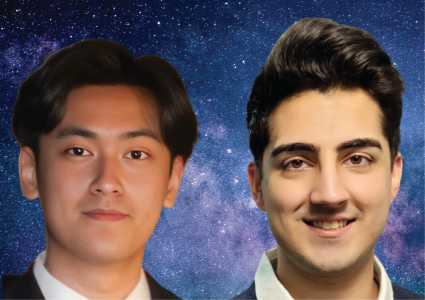
Studying GCSE Astronomy with the Royal Astronomical Society inspired my dream of working at NASA Eagleworks Laboratories. When circumstances meant I needed to stay close to my family, I was unsure what to do next. During that period, I discovered my passion for AI and realised I could combine it with my love of astronomy. This journey led me to create AI Study Studio, because great teachers can change everything, and I believe every student deserves access to one.
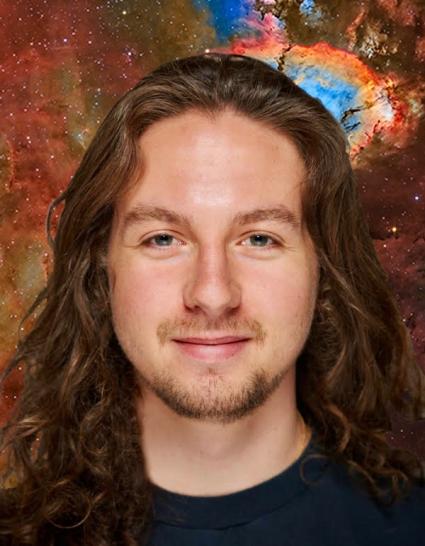
Julian Sommer FRAS
PhD Student in Astrophysics, Ludwig Maximilian University of Munich
Julian Sommer is a PhD student in astrophysics at LMU Munich and a Fellow of the Royal Astronomical Society. His journey to science, however, was anything but a straight line. After high school, Julian completed vocational training as a sign-maker and painter. Gaining confidence in this profession gave him the courage to pursue a degree in physics - a subject that had always fascinated and intimidated him.
During his undergraduate studies, Julian balanced science with art, even writing and publishing an album with his band. He went on to earn a scholarship-funded Master’s in Astrophysics, studying abroad at Queen’s University Belfast where he won the John Geddes Physics Prize. Today, Julian researches cosmic phenomena, demonstrating that a non-linear journey can provide a wonderful foundation for a career in science.
About Julian's Talk
Beyond the Pendulum: From Sign Making and Struggling with Math to Researching the Cosmos
In high school, my math skills weren't the best, and physics class felt like an endless, boring loop of pendulums and blocks sliding down ramps. Astrophysics seemed like a distant, unreachable world I only knew from documentaries and books. In this talk, I will share how I went from vocational training as a sign-maker to becoming a PhD astrophysicist, navigating past my initial intimidation of math. If you have ever felt disconnected from science in secondary school or wondered if you are 'naturally gifted' enough to pursue it, I want to show you the unexpected doors that a non-linear path can open.
Fellows are warmly invited to join us on either or both days (19 and 26 March) to hear from the students and celebrate the culmination of the HPQ Astronomy pilot programme. Julian's talk will be on 26 March.
About the Higher Project Qualification (HPQ) Astronomy Pilot Programme
The Higher Project Qualification (HPQ) in Astronomy is being delivered as a pilot programme at the Royal Astronomical Society by Lucinda Offer, Education and Outreach Officer at the RAS, and Prof Kevin Walsh of Westminster School. Over two years, students undertake independent research and develop astronomy and space science artefacts as part of a project-based qualification designed to complement traditional exam-based pathways in science education. Outcomes from the pilot programme will be reported at the National Astronomy Meeting (NAM) in Birmingham during the Pathways session.
A short talk was given on Year 1 of HPQ Astronomy at the European Astronomical Society Conference in Cork, Ireland, in 2025.
If you have any questions about this event, HPQ Astronomy or the Pathways session at NAM, please contact: Lucinda Offer, Education and Outreach Officer at loffer@ras.ac.uk