


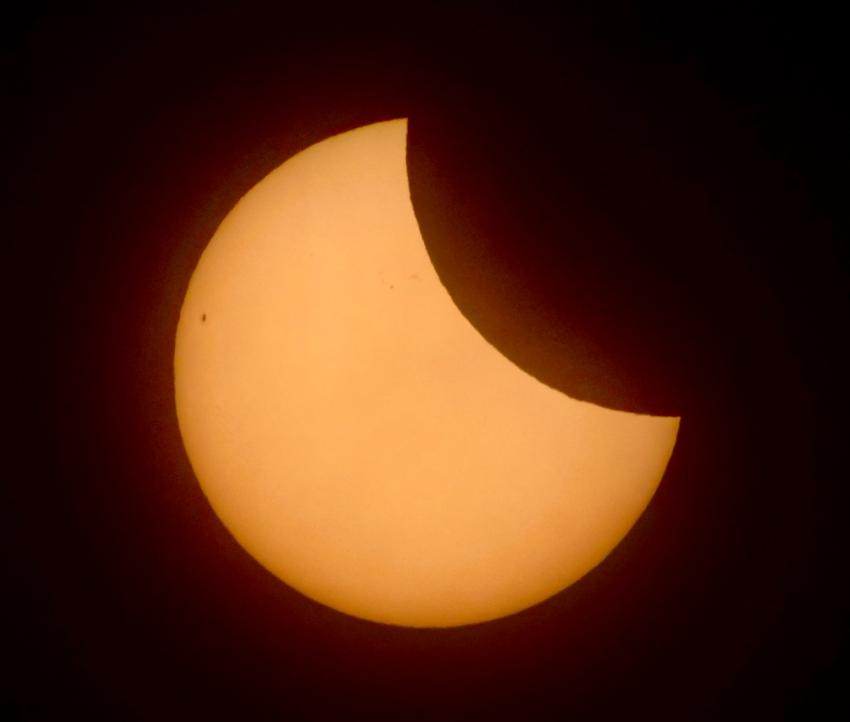

The most impressive solar eclipse visible from the UK in almost 30 years can be enjoyed by people across the country on Wednesday 12 August.
Around 90-96 per cent of the Sun will be covered by the Moon at its peak at around 19:00 BST, with the precise time varying by location. Those in the UK will see the sky turn slightly dimmer as the partial solar eclipse peaks, while parts of Spain, northern Portugal and Iceland will be treated to the first total solar eclipse visible over mainland Europe in 27 years.
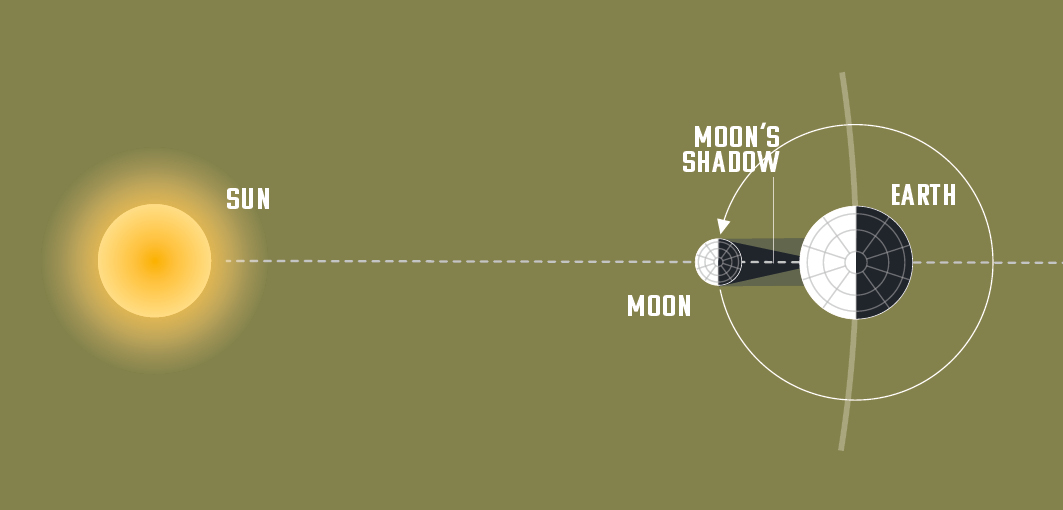
A solar eclipse takes place when the Moon passes between the Sun and Earth, causing our lunar satellite to cast a shadow on Earth.
The last partial solar eclipse in the UK was on 29 March 2025 – but on this occasion only around 30-40 per cent of the Sun’s light was blocked by the Moon at the maximum. Next week it will be upwards of 90 per cent, which is the most coverage over the UK since 1999 when Cornwall in the south west of England witnessed totality.
For those looking for the best place in the UK to observe it, parts of Cornwall, Devon and the Isles of Scilly should enjoy some great views, but it will be more important to find an area with little to no cloud cover than seeking out somewhere with a higher percentage of Sun coverage.
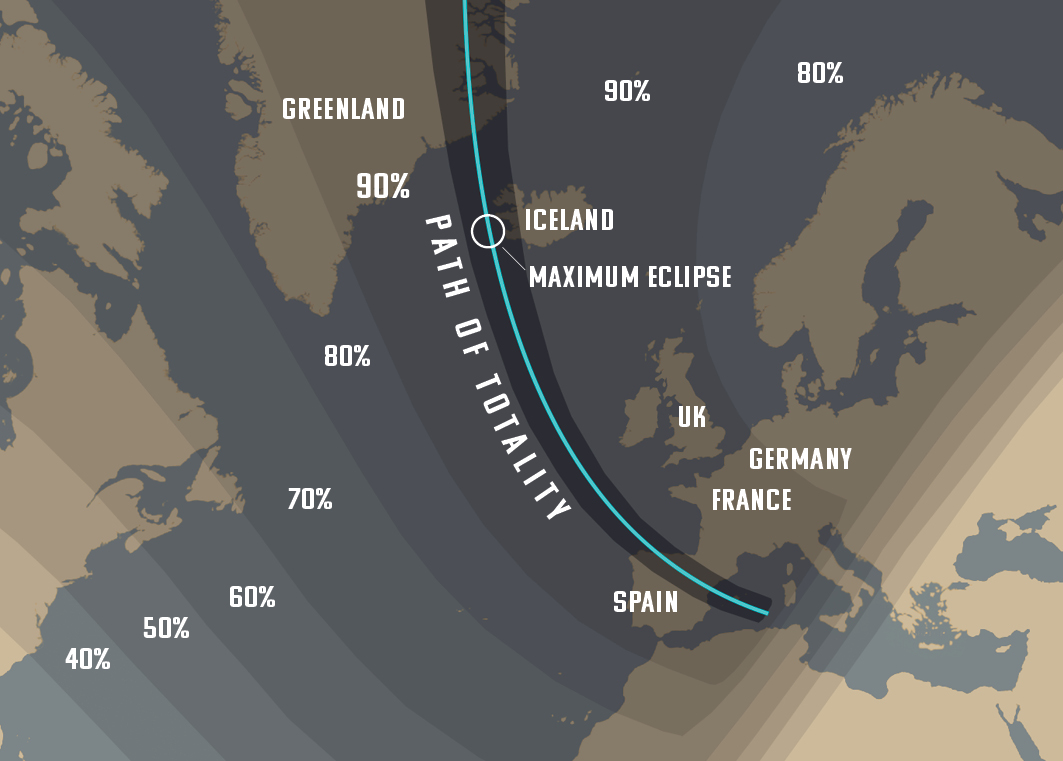
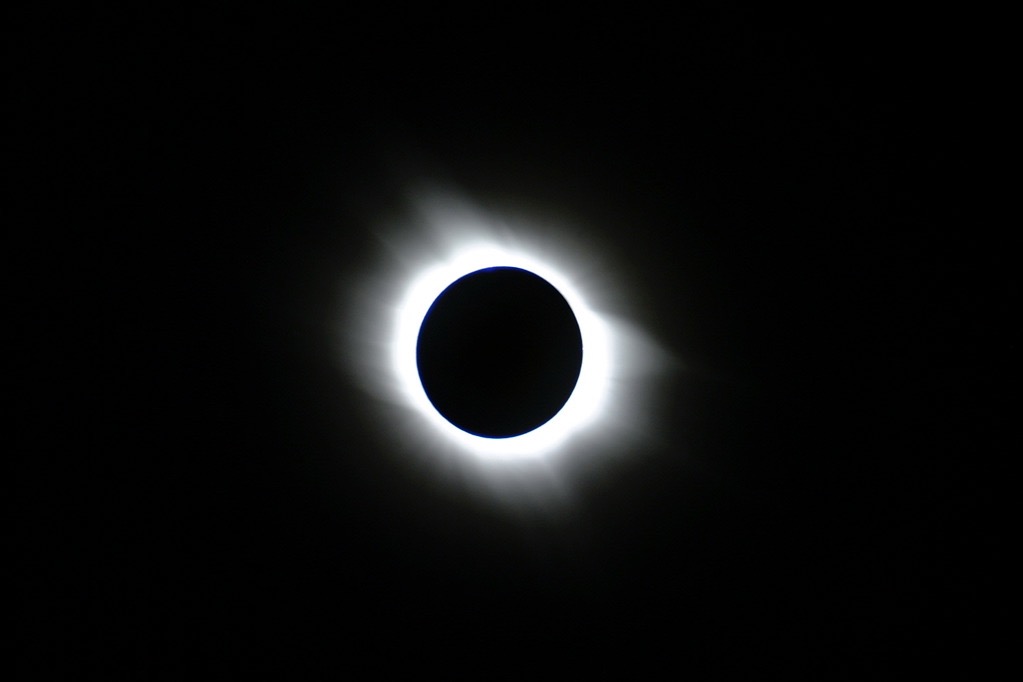
Although the UK will see more than 90 per cent of the Sun disappear behind the Moon, there is still a huge difference between that and totality. With the former it will appear like a normal cloudy day, while the latter allows people to witness night-like darkness and the glowing solar corona.
However, because the Sun is so bright it is extremely dangerous to just go out and look up at a solar eclipse, so it is important to take safety precautions to prevent permanent damage to your eyes or even blindness.
You must not look at the Sun with the naked eye or with a telescope – unless you have the right kind of filters.
The eclipse can be observed safely with everyday objects such as a kitchen colander or two pieces of paper and a pushpin, which can be used to create a projection screen for the Sun's rays.
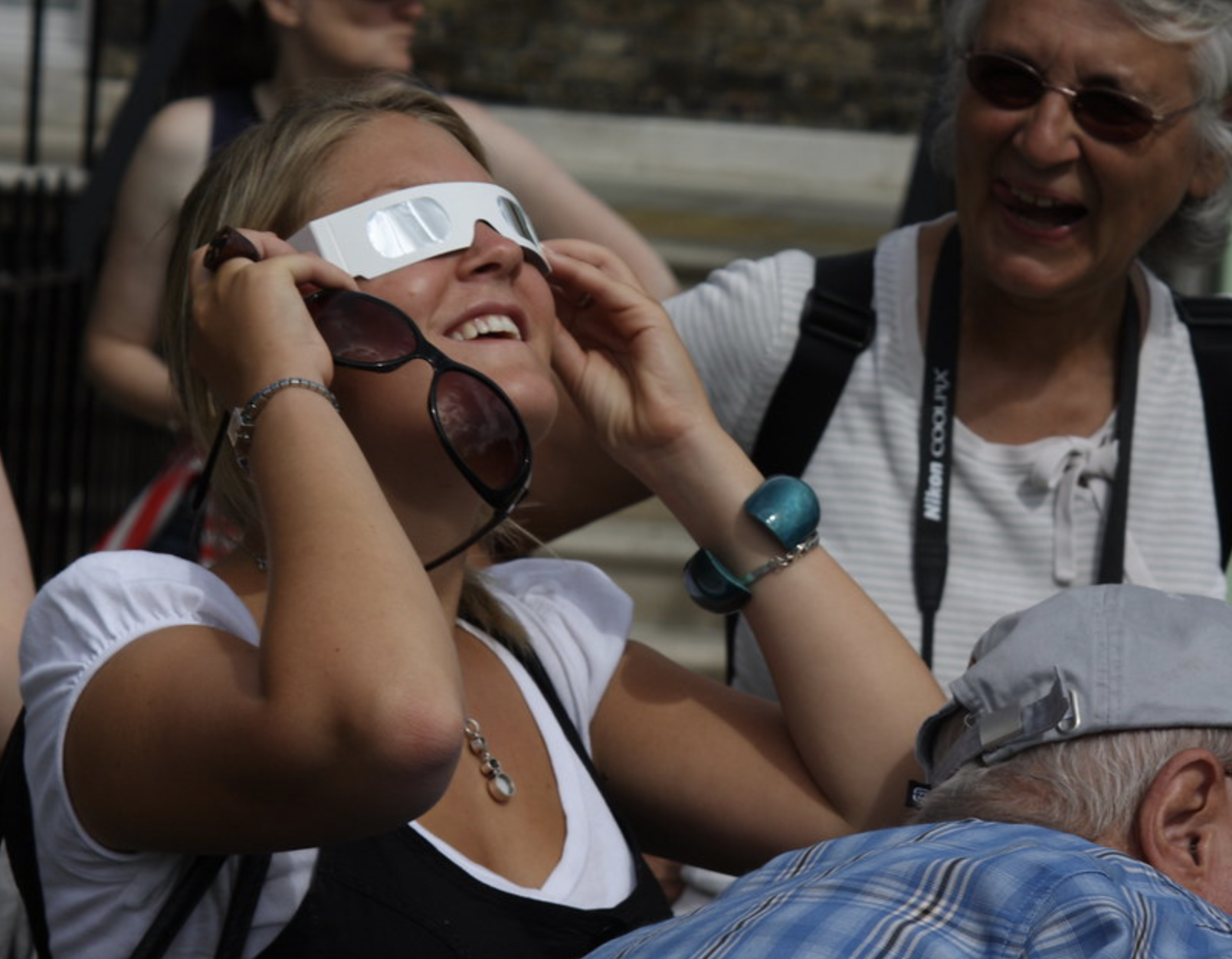
If you have any official CE-marked eclipse glasses from previous events these may also be safe to use, but only if they have been stored safely and the surfaces haven't been damaged in any way.
Check that there are no tiny holes in the coatings, or wrinkles where the coating may have worn away.
Eclipse glasses must bear the ISO 12312-2 safety standard. They can be ordered online via ukeclipse.com, which also has information about the eclipse and details of events being held across the UK.
RAS President Professor Jim Wild said: "I would encourage everyone to enjoy the spectacle safely.
"Never look directly at the Sun without appropriate solar viewing equipment. Certified eclipse glasses, specially designed solar filters for telescopes and binoculars, or indirect methods such as pinhole projectors are all safe ways to observe the event.
"With the right precautions, this eclipse promises to be an inspiring experience for seasoned astronomers and first-time skywatchers alike."
If you're in Spain for your summer holiday, Valencia, Zaragoza, Bilbao, A Coruña, León, Burgos and Santander will all witness totality, as well as Palma in Mallorca.
In the UK, London is expected to have around 91 per cent coverage, Cardiff 93 per cent, Edinburgh 91 per cent, Belfast 93 per cent, Newcastle 92 per cent and Plymouth 95 per cent. The eclipse will be low in the evening sky, taking place as the Sun sets towards the west or northwest horizon.
There are between two and five solar eclipses each year, with a total eclipse taking place somewhere in the world every 18 months or so. Total solar eclipses are seen every 400 years from any one place on the surface of the Earth.
The next total solar eclipse visible from the UK won't be until 23 September 2090.
The bonus of the Perseids
What makes this solar eclipse even better is that is also coincides with the Perseid meteor shower, which peaks overnight on 12-13 August.
The shower, which is usually one of the most spectacular of the year, is best viewed from the northern hemisphere and will be visible all over the UK, if skies are clear.
The ideal time to see it is between midnight and 5.30am, although observers should be able to see some meteors as soon as the Sun sets.
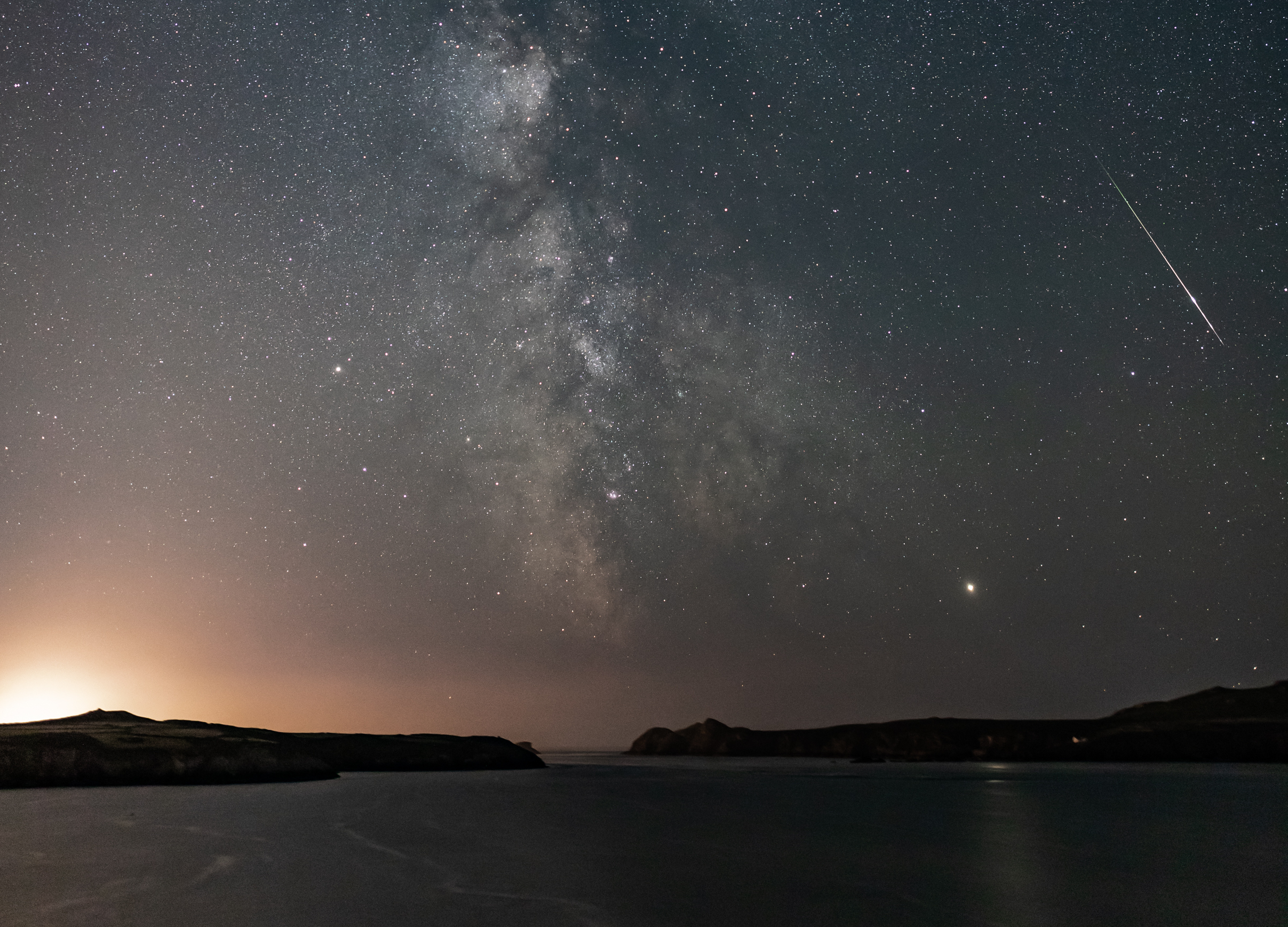
Meteor showers occur when the Earth passes through a clump of debris in space, as our planet moves along its orbit around the Sun. The dust causing the Perseids comes from a comet known as Swift-Tuttle, which last passed near Earth in 1992 and orbits the Sun approximately once every 133 years.
The shower meteors are named for the point in the sky where they appear to originate – the so-called 'radiant' – located in the constellation of Perseus.
Unlike a lot of celestial events, meteor showers are easy to watch and no special equipment is needed, although a reclining chair and a blanket make viewing more comfortable.
Most importantly it will help to be away from artificial light, so observers are advised to avoid built-up areas if possible, and to try to find an unobstructed view of the sky.
If clouds or the Moon do make viewing impossible on the peak night itself, the shower will continue on subsequent nights with likely reduced activity.
ENDS
Media contacts
Sam Tonkin
Royal Astronomical Society
Mob: +44 (0)7802 877 700
Notes for editors
About the Royal Astronomical Society
The Royal Astronomical Society (RAS), founded in 1820, encourages and promotes the study of astronomy, solar-system science, geophysics and closely related branches of science.
The RAS organises scientific meetings, publishes international research journals, recognises outstanding achievements by the award of medals and prizes, maintains an extensive library, supports education through grants and outreach activities and represents UK astronomy nationally and internationally. Its more than 4,000 members (Fellows), a third based overseas, include scientific researchers in universities, observatories and laboratories as well as historians of astronomy and others.
The RAS accepts papers for its journals based on the principle of successful peer review, following which experts on the Editorial Boards accept the papers for publication. The Society issues press releases based on a similar principle, but the organisations and scientists concerned have overall responsibility for their content.
Keep up with the RAS on Instagram, Bluesky, LinkedIn, Facebook and YouTube.
Download the RAS Supermassive podcast