



The Invisible Universe and XLZD - A (sustainable) search for Dark Matter
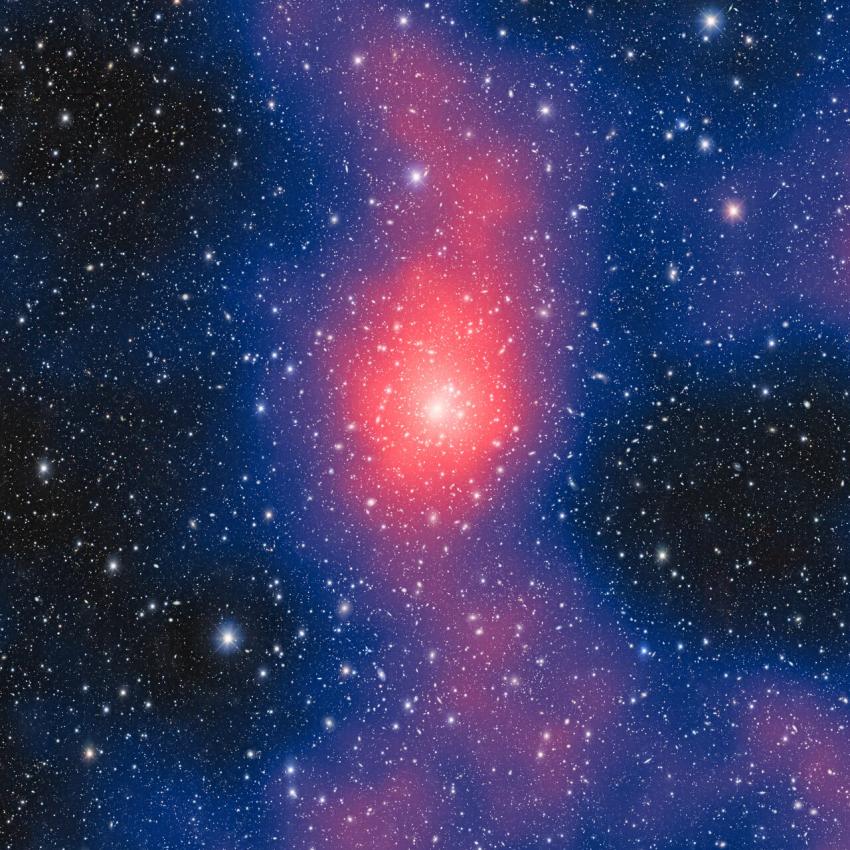
Most of the matter of the Universe is invisible — neither emitting nor absorbing light. This 'dark matter' shapes the Universe through its gravitational effects. Despite decades of study, its true nature remains a central open question in physics.
I will outline why we think dark matter exists and how we attempt to detect it directly through the observation of extremely rare interactions with ultra-sensitive detectors. I will focus on the next-generation XLZD Experiment, an ambitious international programme to build the most sensitive detector of its kind. Furthermore, I will highlight how such large-scale experiments can be designed sustainably, drawing on my experience leading the environmental impact and lifecycle planning efforts for the UK XLZD Programme.
Speaker biography:
Jon Hays is Professor of Physics at Queen Mary University of London.
Together with Dr Sadaf Alam, Jon leads the National Federated Compute Services Network Plus Programme. He is Science Director of the STFC IRIS Federation and a member of the project board of the GridPP Project.
Jon completed his PhD in Experimental Particle Physics at Imperial College London in 2000. He worked as a postdoctoral research associate first for Imperial and then from 2004 for Northwestern University based at the Fermi National Accelerator Laboratory near Chicago. In 2006 he took up a PPARC Advanced Research Fellowship at Imperial College. In 2012 he joined Queen Mary as a Lecturer with promotion to Professor in 2021.
Jon’s scientific interests have spanned many areas, including detector design, data acquisition systems, algorithm development, precision electroweak measurements and searches for Higgs bosons and new phenomena. More recently he has been focusing on measurements of neutrinos and the search for dark matter. However, a constant theme throughout his career has been research computing, acting at various times as a user, developer, administrator, service provider, coordinator and leader.
This talk is exclusively for Friends of the RAS members
Want to attend talks like this? Learn more about becoming a Friend and get access to special events, talks, newsletters, and more.
Accessibility Information
Please note that this venue is currently not wheelchair accessible as the ramp is temporarily out of order, and step-free access is unavailable.
We sincerely apologise for any inconvenience caused. We are committed to improving accessibility and are working to address this.
If you have any specific access requirements or questions, please contact us at events@ras.ac.uk or call us on 020 7734 4582 .