
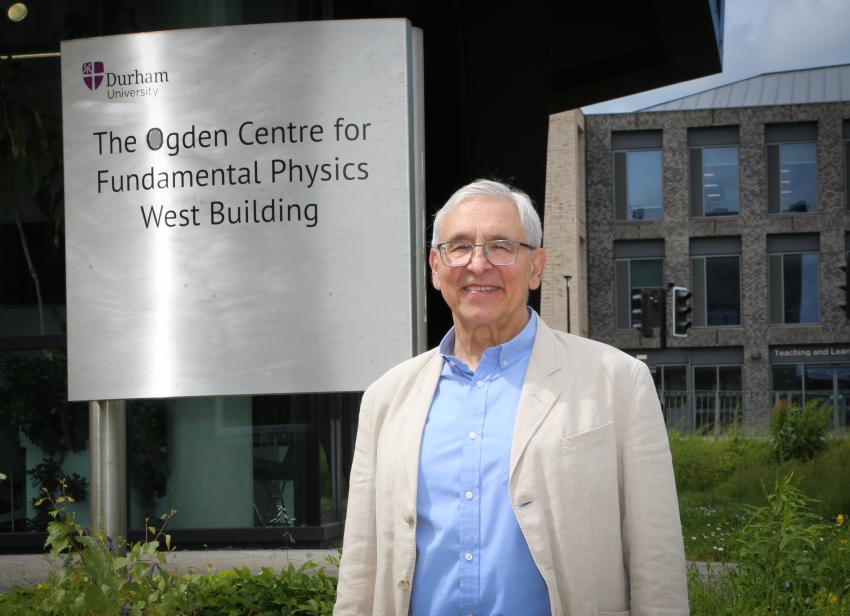

A world-leading cosmologist and winner of the Royal Astronomical Society's Gold Medal has been knighted in the King's Birthday Honours.
Professor Carlos Frenk, an RAS Fellow based at Durham University, received the honour of Knight Bachelor from His Majesty King Charles III for services to astrophysics and cosmology.
Sir Carlos is one of the originators of the Cold Dark Matter theory for the formation of structure in the universe – one of the foremost theories for the evolution of our cosmos.
He said: "To be knighted by His Majesty The King is a tremendous honour and to say that I am overjoyed is an understatement.
"I am hugely grateful to my wife, Susan, and my family, my colleagues and students, and to Durham University, all of whom have given me unconditional support over the years, without which this would have never happened.
"As a teenager I remember being captivated by a night sky alight with stars and I knew then that I wanted to spend my life understanding its origins.
"To have been able to do that, working alongside some of the world’s most talented scientists, has been the greatest privilege."
Working with scientists across the world Sir Carlos uses high-power supercomputers to build model universes, based on the known laws of physics.
The techniques he and his collaborators have developed are now commonly used by cosmologists to explain the formation of the galaxies and other large-scale cosmic structures that we see in the universe.
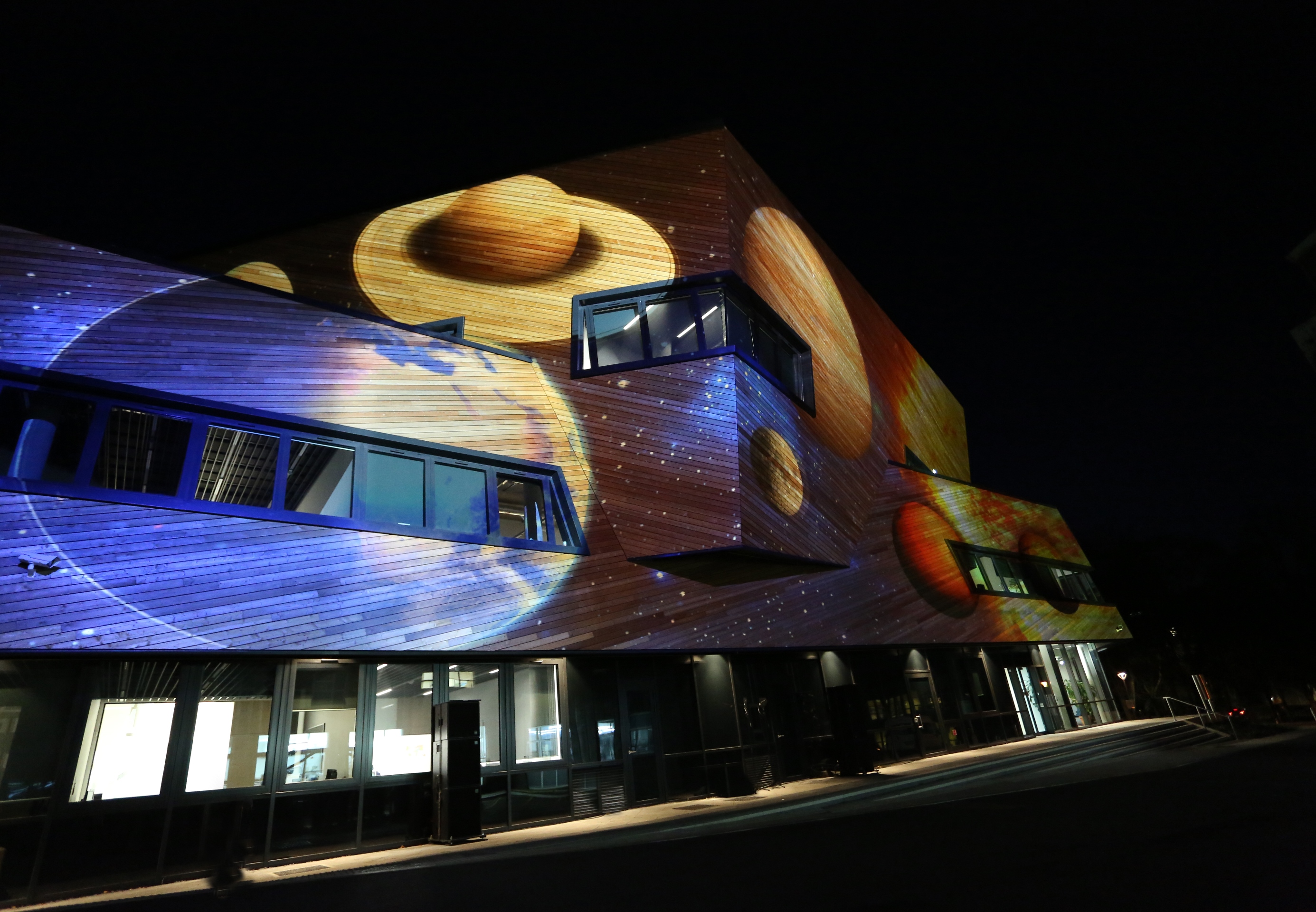
Sir Carlos, who is the Ogden Professor of Fundamental Physics in Durham’s Department of Physics, also played an influential role in creating the university's Ogden Centre – a leading international centre for research in cosmology, astronomy and particle physics.
His knighthood is his second royal honour, after he was awarded a CBE by Her Late Majesty Queen Elizabeth II in 2017.
Sir Carlos is a Fellow of the Royal Society and received the Society's Rumford Medal for outstanding physics research in 2021. He is also a Fellow of the Royal Astronomical Society and won its Gold Medal for Astronomy in 2014.
Professor Jim Wild, President of the Royal Astronomical Society, said: "Carlos is a scientist of extraordinary vision whose pioneering work has transformed our understanding of the nature of dark matter and revealed how it has shaped the structure of our modern universe.
"Beyond his groundbreaking research, he has been an inspirational leader and mentor to generations of astronomers, shaping both our field and the global scientific community. This honour recognises not only his profound scientific achievements, but also his enduring commitment to excellence, collaboration, and the public good.
"On behalf of the Society, I offer him my warmest congratulations on this exceptional distinction."
ENDS
Media contacts
Sam Tonkin
Royal Astronomical Society
Mob: +44 (0)7802 877 700
Notes for editors
About the Royal Astronomical Society
The Royal Astronomical Society (RAS), founded in 1820, encourages and promotes the study of astronomy, solar-system science, geophysics and closely related branches of science.
The RAS organises scientific meetings, publishes international research journals, recognises outstanding achievements by the award of medals and prizes, maintains an extensive library, supports education through grants and outreach activities and represents UK astronomy nationally and internationally. Its more than 4,000 members (Fellows), a third based overseas, include scientific researchers in universities, observatories and laboratories as well as historians of astronomy and others.
The RAS accepts papers for its journals based on the principle of successful peer review, following which experts on the Editorial Boards accept the papers for publication. The Society issues press releases based on a similar principle, but the organisations and scientists concerned have overall responsibility for their content.
Keep up with the RAS on Instagram, Bluesky, LinkedIn, Facebook and YouTube.
Download the RAS Supermassive podcast